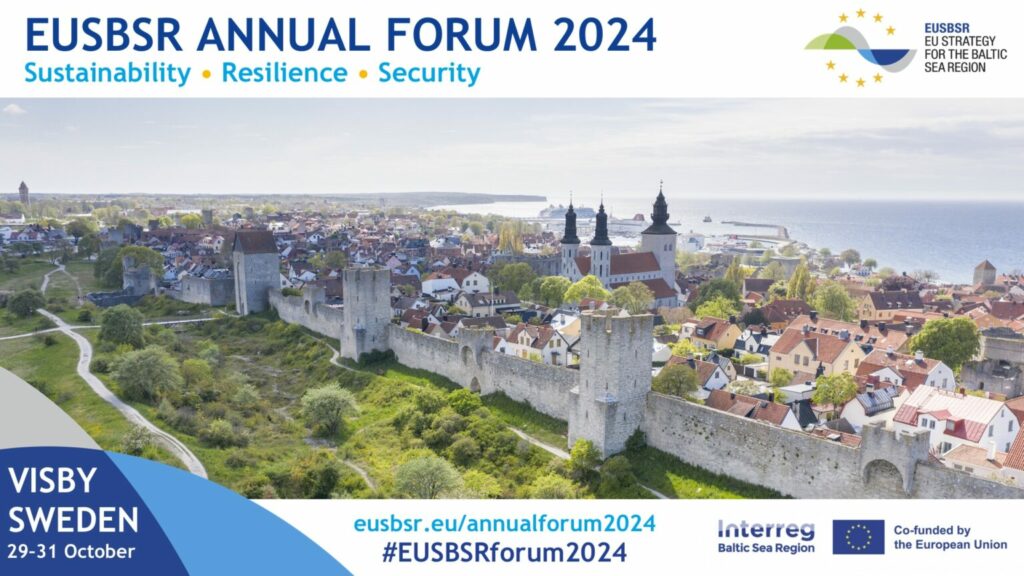
EUSBSR Annual Forum Starts Soon – Follow the Programme Online on 30-31 October
The Annual Forum is the yearly gathering for collaboration in the Baltic Sea Region within the framework of the EU Strategy for the Baltic Sea Region, which has been held since 2009. This year, the Forum will be held in Visby on the island of Gotland, Sweden. The Forum takes place over two days on 30 and 31 October, with an optional side event on 29 October.
Four plenary dialogues are planned for the EUSBSR Annual Forum and these will be live-streamed on the following website www.eusbsr.eu. Three of the sessions are thematic (bioeconomy, transport, and energy, respectively). The last one is a part of the closing session, summarising the discussions at the Forum and pointing forward. Follow the forum online!
With the overall themes of Sustainability, Resilience, and Security, the Forum aims to deepen our understanding and enhance collaborative efforts in these areas.
The Central Baltic Programme will shape the future of cross-border cooperation together with Interreg Baltic Sea Region by participating in the workshop (Parallel Session 3) which will discuss the outcomes of the stakeholder consultations about the future of transnational and cross-border cooperation in the Baltic Sea region. The programmes are represented in the networking village where you can put your questions to them.
The two hosts for the Annual Forum are the Swedish Government together with the Nordic Council of Ministers. The organisers are the Gotland County Administrative Board in close collaboration with the secretariat of the Nordic Council of Ministers, the Government Offices of Sweden, the Norden Association Sweden, the Swedish Institute, Region Gotland and the Baltic Sea Strategy Point. The event is co-funded by the Interreg Baltic Sea Region Programme, the Swedish Government, the Nordic Council of Ministers, the Swedish Institute and Region Gotland.